
Victims of a Decade of Repression Going Unheard, a Roadmap for Europe
As the Parliamentary Assembly prepares to adopt a new text on the silencing of independent voices in Azerbaijan, its findings echo what our Campaign has documented: a decade of repression. The case of Anar Mammadli shows the human cost of Europe’s silence. The pathway out of that silence is clear and it runs through Article 52 of the European Convention on Human Rights.
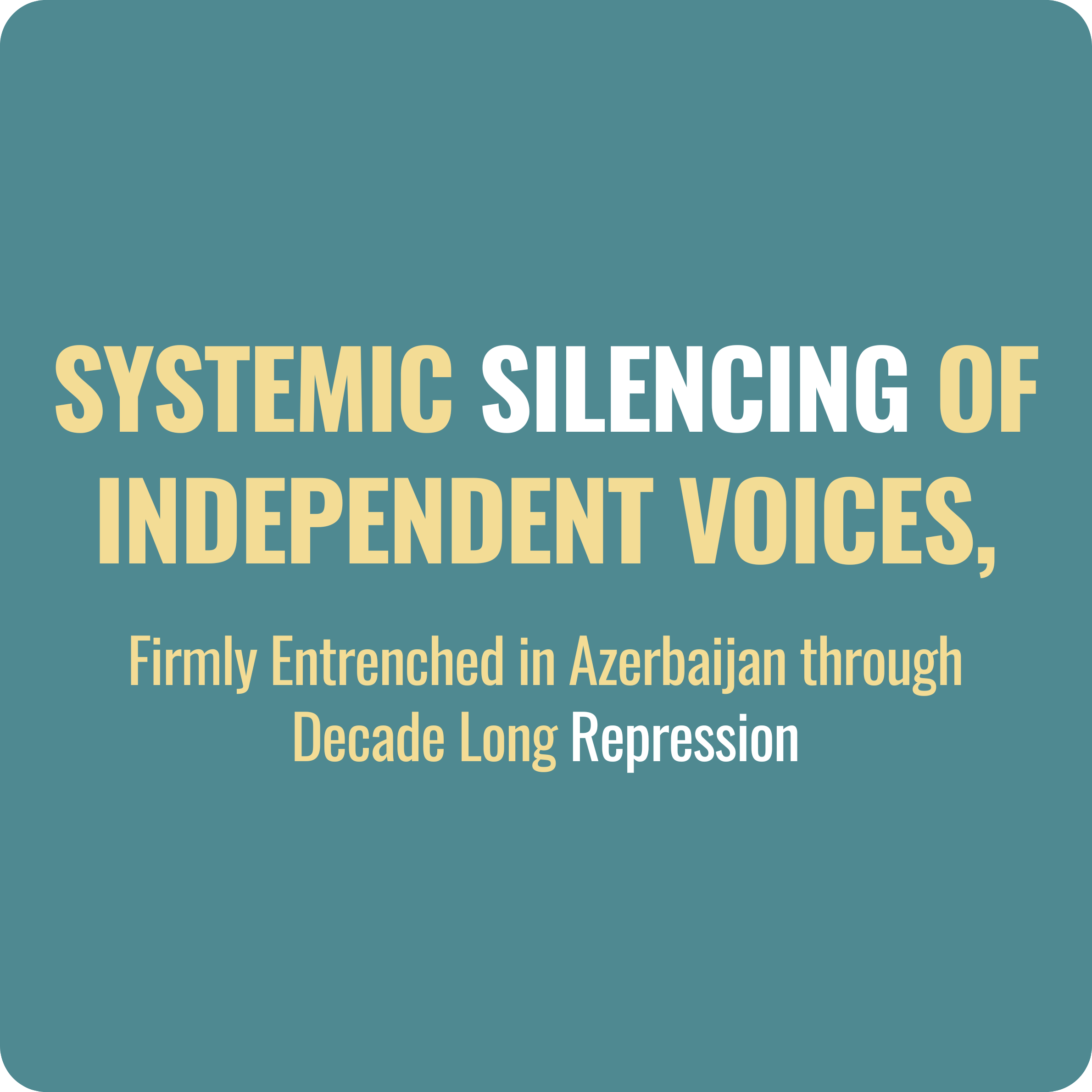
The Assembly deeply deplores the systemic pattern of silencing dissent and stifling of independent voices that has become firmly entrenched in Azerbaijan.
With these words, the Committee on Legal Affairs and Human Rights of the Parliamentary Assembly of the Council of Europe opens its draft resolution on silencing critical voices in Azerbaijan, set for debate and adoption at its June plenary session.
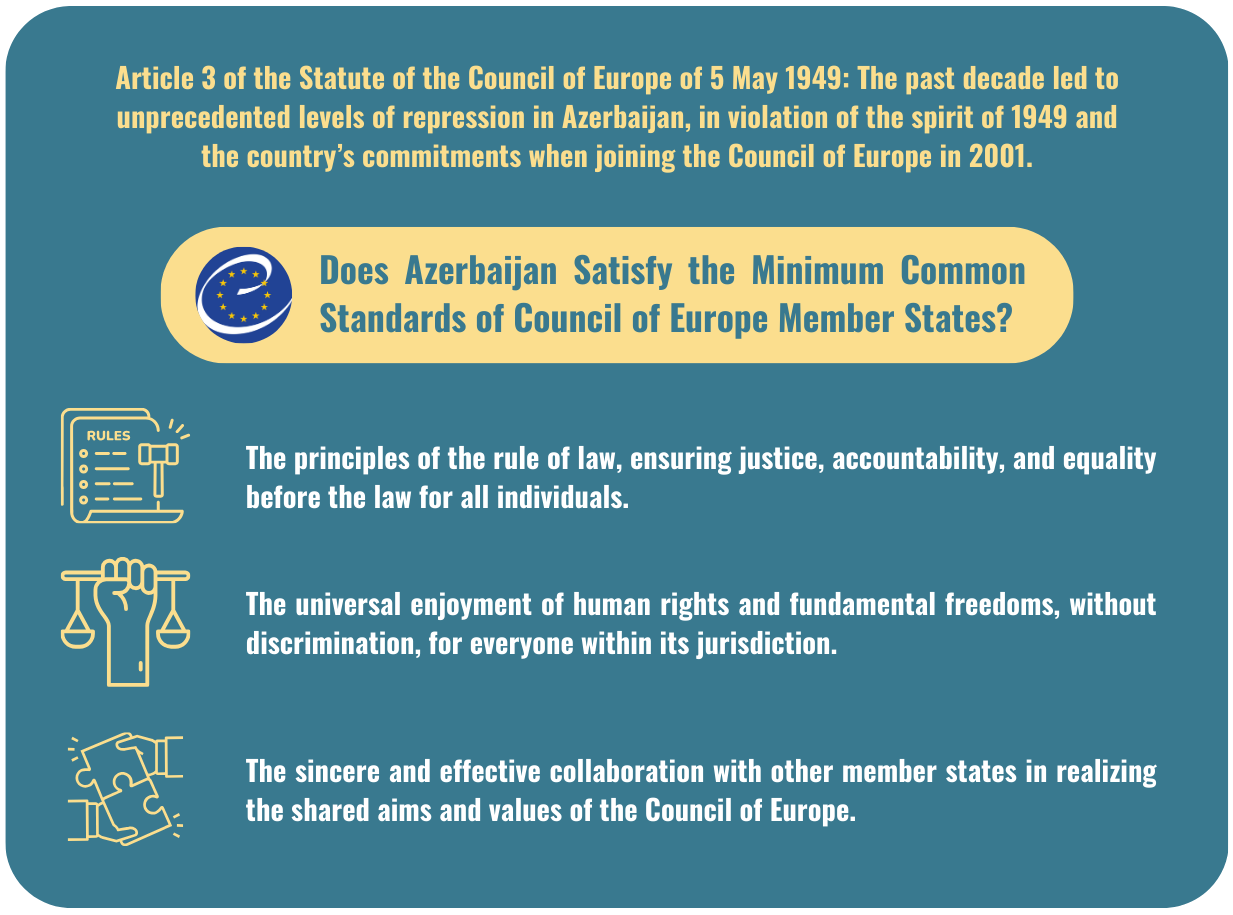
For more than a decade, the Azerbaijani authorities have silenced independent voices through restrictive legislation, the misuse of criminal law and a judiciary that serves the executive. Our report Quest for Justice in a Climate of Unprecedented Repression documented how each wave of repression follows the adoption of laws that criminalise, prosecute and intimidate dissent, and how this machinery dismantled the country’s independent media and civil society.
The case of Anar Mammadli is emblematic of this decade: a human rights defender, election observer and laureate of the 2014 Václav Havel Human Rights Prize, he was imprisoned in 2013, released in 2016, and vindicated by the European Court of Human Rights, which found his detention politically motivated. Eight years on, that judgment remains unimplemented, and he sits in prison once more, tried as a repeat offender on the conviction the Court ordered quashed.
The political prisoners held in Azerbaijan embody the very values the European Union portrays itself as defending, and everything the Council of Europe stands for. To them, silence is deafening. If they, their families, friends and colleagues stop believing in the bodies meant to protect them, European human rights institutions lose their best advocates and their relevance.
The response of the European Union and the Council of Europe to this decade has been silence, and that silence carries a cost.
As our report Trading Away Principles set out, the European Union treated energy and connectivity as matters insulated from human rights, and Baku read this restraint as a signal that deeper repression carries little diplomatic cost.
The signal travels far beyond Baku: Azerbaijan is setting a new lowest common denominator for the treatment of critics, and other governments are watching. They learn that they may go as far as Azerbaijan and expect the same silence in return. At the time of a “global realignment” in multilateralism, in which great powers favour transactional international relations, Europe’s silence only empowers repression domestically.
Our Campaign offered a pathway
Rather than silence, our Campaign offered a way to address the situation.
Our report on the Council of Europe called on the Secretary General to initiate an investigation under Article 52 of the European Convention on Human Rights into the weaponisation of the legal system, and on the Committee of Ministers to condition any future engagement on clear human rights benchmarks. The draft resolution now before the Assembly makes that same call, inviting the Secretary General to use his powers under Article 52.
Through doing so, the Council of Europe’s leadership would offer human rights leadership to the whole of Europe, show how to engage with a country that only shows contempt for justice, and indeed… lead the way to address what amounts to a human rights crisis within its own jurisdiction.
The roadmap indeed exists. What remains is the will to follow it.
 EN
EN  AZ
AZ