
Partnership Without Conditions: Our Briefing Note for the European Parliament
Ahead of the European Parliament’s hearing on Azerbaijan on 7 May 2026, the Campaign has submitted a briefing note to members of the Subcommittee on Human Rights. It documents the continuing deterioration on the ground, maps the implementation of the December 2025 resolution paragraph by paragraph, and analyses what the 11 March 2026 Costa–Aliyev joint statement reveals about EU priorities.
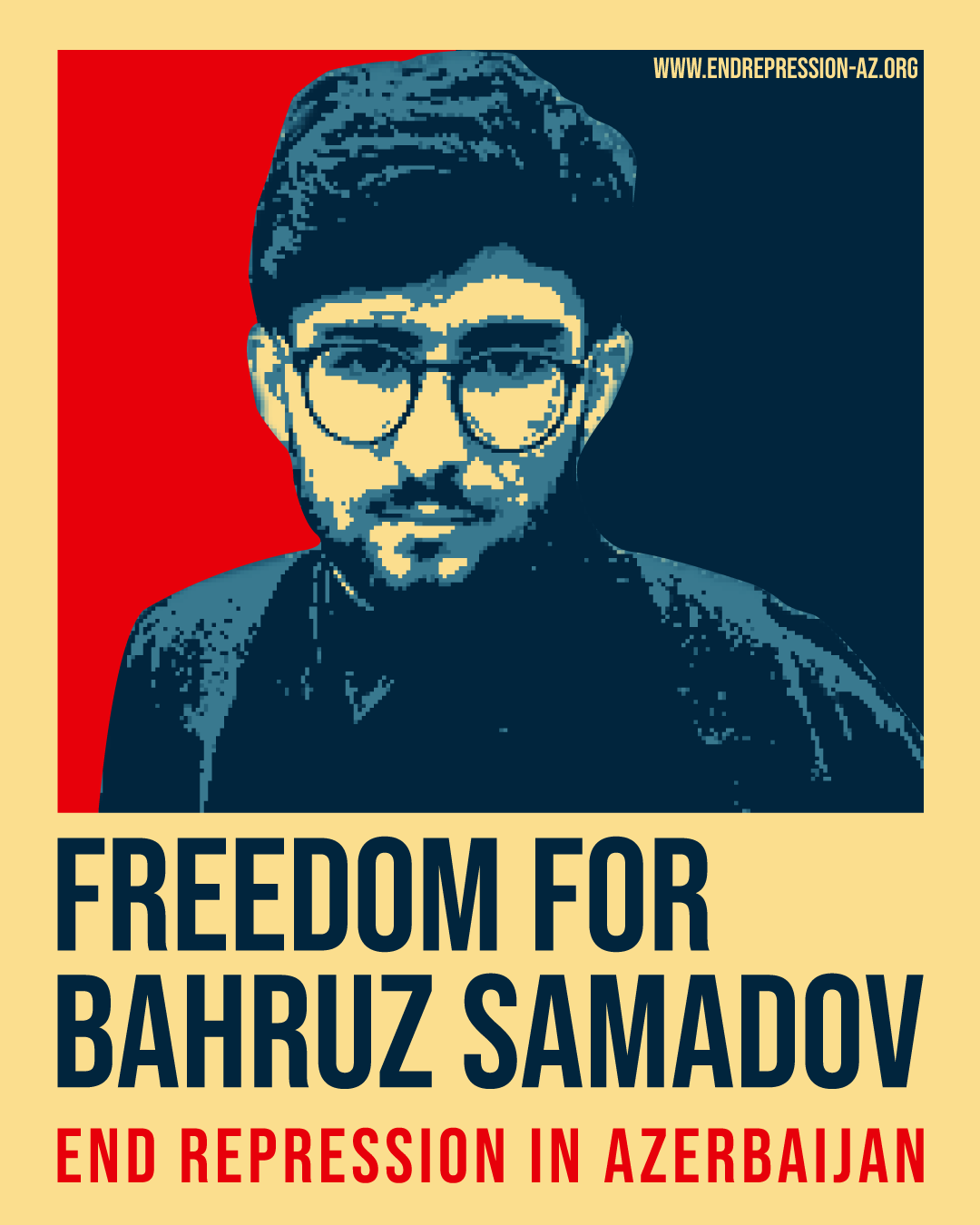
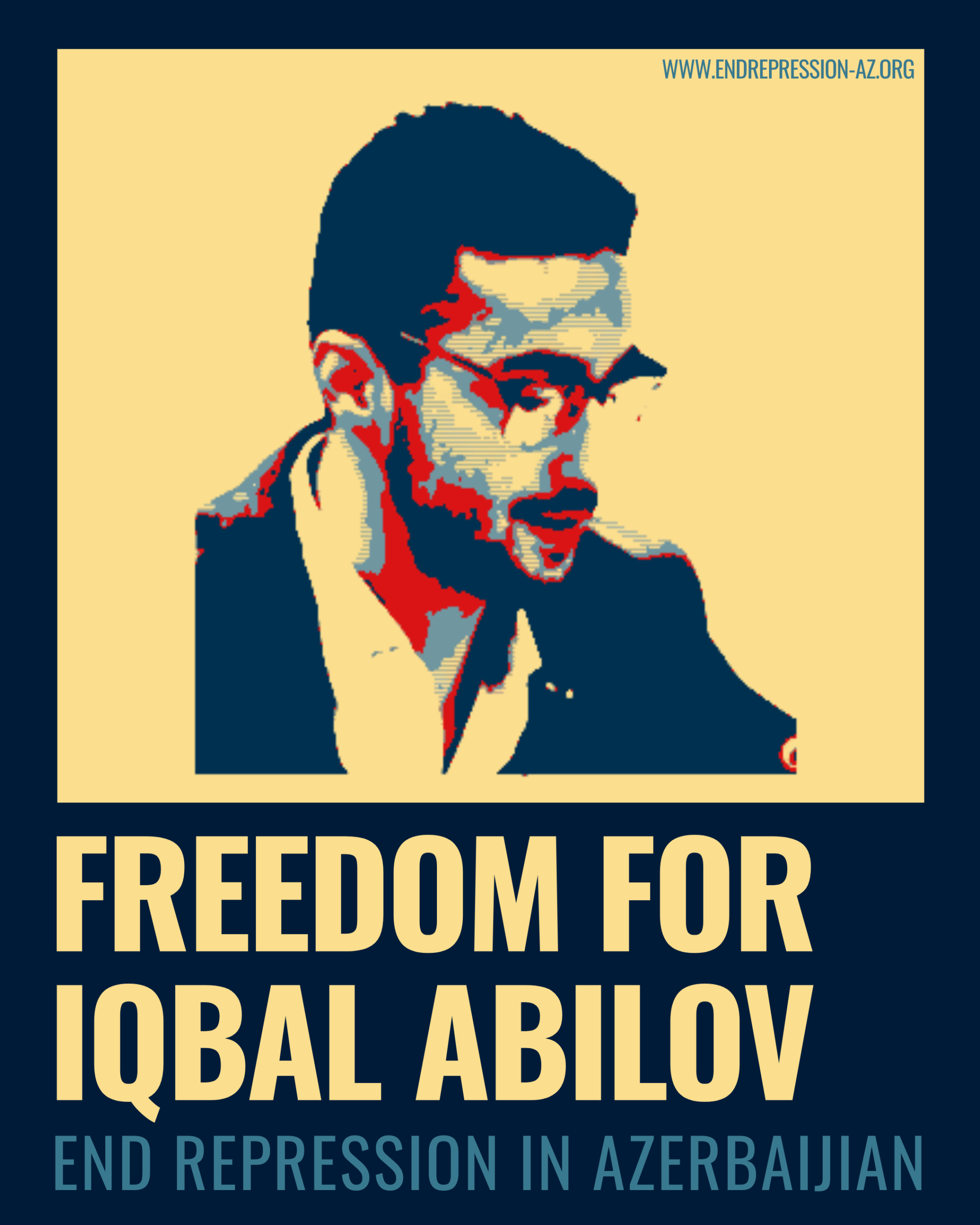
On 7 May 2026, the European Parliament’s Subcommittee on Human Rights meets to consider the implementation of its own resolution of 18 December 2025 on the arbitrary arrest and sentencing of academics Bahruz Samadov and Igbal Abilov in Azerbaijan. We submitted a briefing note to the members of the Subcommittee ahead of this hearing.
On the situation in Azerbaijan, the picture has continued to deteriorate: Bahruz Samadov, sentenced to 15 years on charges of high treason for contact with Armenian scholars, and Igbal Abilov, sentenced to 18 years for his academic work on Talysh culture, remain detained. Both have seen their health decline in prison. These cases follow the persecution of fellow academics Gubad Ibadoghlu and Fazil Gasimov, confirming a pattern of targeting independent scholarship. Ali Karimli, whose arrest in December 2025 the resolution expressly condemned, also remains detained.
The EU response: actions and gaps
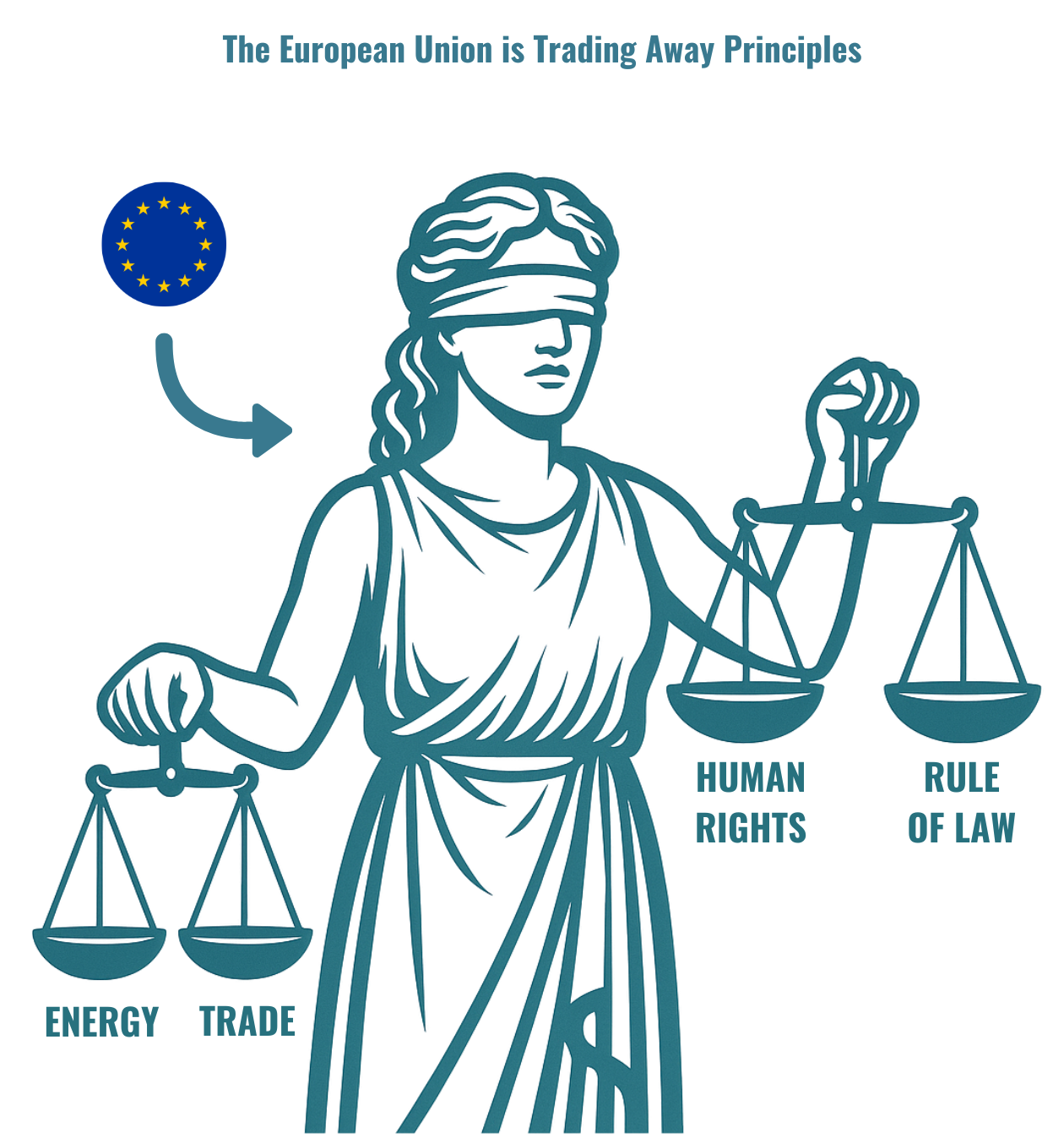
The European Union’s shift towards treating Azerbaijan primarily as an energy and transit partner — accelerated by Russia’s war of aggression on Ukraine — has come at a direct cost to human rights conditionality: EU High Representative Kaja Kallas visited Baku in April 2025 and agreed to resume partnership agreement negotiations. Her visit included no public statement on political prisoners, civic space or the media landscape. The EUR 3 billion commitment to Middle Corridor transport projects carries no human rights conditions.
On the specific asks of the December 2025 resolution: most remain unimplemented, as we document in our briefing note.
- The EU Global Human Rights Sanctions Regime has not been applied to any Azerbaijani official.
- The EU Special Representative for Human Rights has not publicly confirmed the meetings with detained academics that paragraph 7 of the resolution called for.
- Partnership agreement negotiations have resumed without stated human rights benchmarks, contrary to paragraph 9.
The joint statement of 11 March 2026
The briefing note includes a detailed analysis of the joint press statement issued following the Costa-Aliyev meeting in Baku. The statement is the most authoritative public record of what the EU prioritises in this relationship: EU language on democracy, rule of law and human rights is replaced with Azerbaijan’s preferred framing of sovereignty and territorial integrity.
- Partnership agreement negotiations are to be swiftly finalised with no benchmarks stated.
- Extensive commitments on connectivity, energy and investment carry no human rights conditions of any kind.
- Political prisoners, civil society, media freedom, academic freedom, rule of law, ECHR judgments and the EP resolution of 18 December 2025 do not appear anywhere in the statement.
The COP29 framing is worth noting specifically. The statement welcomes the successful outcomes of the Baku climate conference without reference to the context in which it took place: COP29 was held during the most intense period of political repression since Aliyev came to power, including the arrests of Anar Mammadli and Bashir Suleymanli, co-founders of the Climate of Justice Initiative, one immediately before and one immediately after the conference.
What the briefing asks of the European Parliament
We put five concrete avenues of action to DROI members:
- The European Parliament should request a written account from the Commission and the EEAS of what human rights benchmarks are attached to the resumed partnership agreement negotiations and to the 2022 energy Memorandum of Understanding. Any agreement must remain conditional on the release of all political prisoners and the lifting of restrictive legislation, in line with paragraph 9 of the resolution;
- It should formally invite the Council to give effect to paragraph 6 of the resolution by opening a review process under the EU Global Human Rights Sanctions Regime, identifying officials responsible for the prosecutions of Samadov, Abilov, Ibadoghlu, Karimli and others;
- It should request written reporting from the EU Delegation in Baku on trial monitoring since December 2025, and from the EU Special Representative for Human Rights on contacts with detained academics;
- It should continue naming individual cases publicly and consistently, in plenary questions, committee exchanges and bilateral meetings with Commission and Council officials. The cases of Bahruz Samadov, Igbal Abilov, Gubad Ibadoghlu, Ali Karimli and the dozens of journalists and human rights defenders arrested since 2023 constitute political leverage precisely because they are named;
- Finally, it should signal clearly to the Commission and Member States that deepening cooperation with Azerbaijan in the absence of measurable human rights progress is inconsistent with the European Parliament’s own resolutions and with the EU’s founding values. The 11 March 2026 joint statement should be raised directly with the European Council and the Commission.
Read Trading Away Principles, for further research on EU-Azerbaijan relations and specifically how under EU High Representative Kaja Kallas’s leadership the EU’s realignment took place.
 EN
EN  AZ
AZ